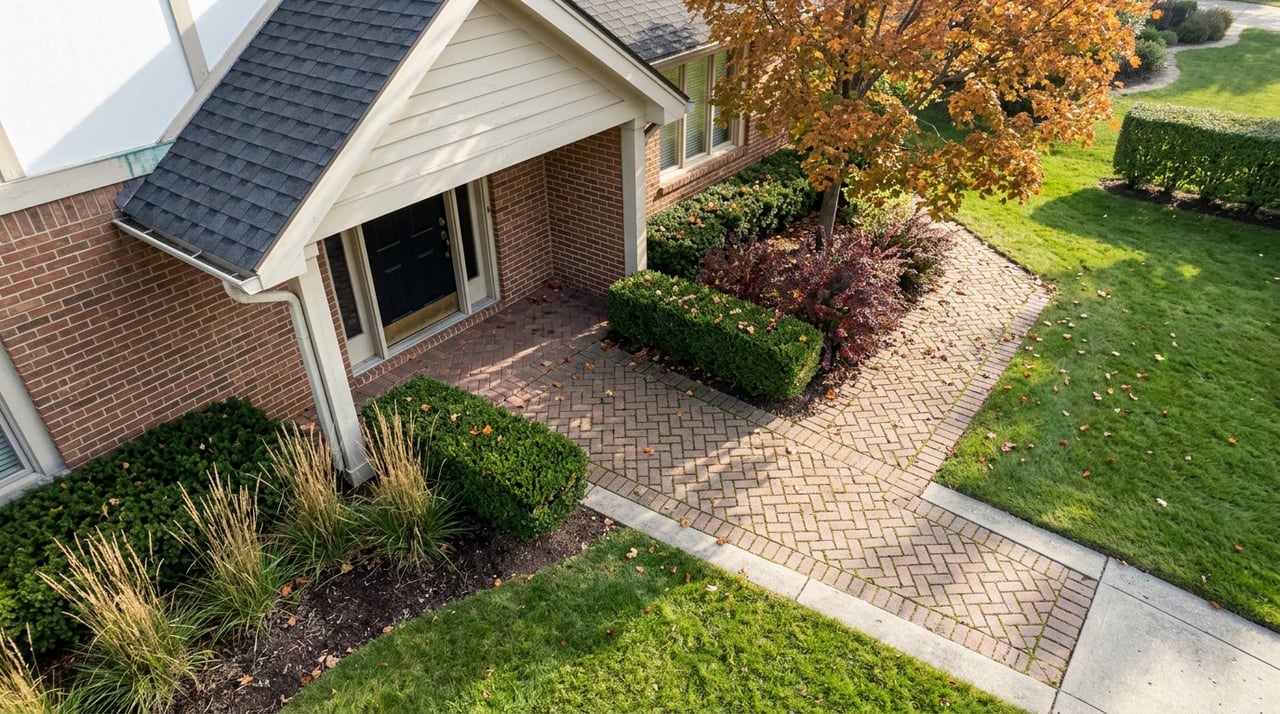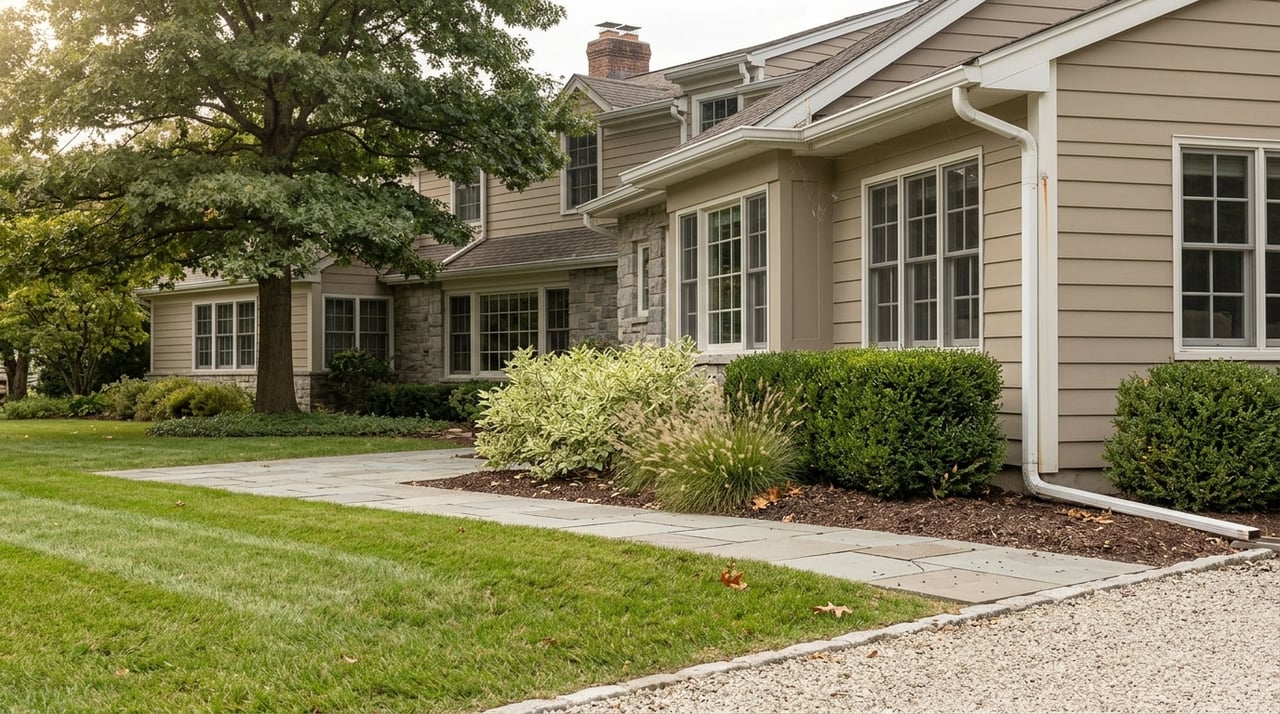
A buyer looking at two Bartlett listings this month, both brick two-stories, both listed within a few thousand dollars of each other, might reasonably assume the tax bill will land somewhere close too. It won't, and the reason has nothing to do with the house.
Bartlett is one of the rare Illinois villages that straddles three counties at once. Depending on which side of a single street a home sits on, the property could be taxed under Cook County's rules, DuPage County's rules, or a small Kane County pocket most people never hear about until they're deep in a contract. That split doesn't just show up on a mailing address. It changes how the tax bill gets calculated, which office the deed gets recorded with, and what stamps have to be purchased before closing can happen at all.
The Boundary Runs Down Devon Avenue, Not Around the Village
According to the Village of Bartlett's own breakdown of its county lines, the majority of homes north of Devon Avenue and east of Route 25 fall in Cook County, with one notable exception: homes in Bartlett Pointe West are in Kane County even though they sit in that same northern section. Homes south of Devon Avenue and east of Route 25 fall in DuPage County.
That means a buyer comparing two listings on opposite sides of Devon Avenue isn't just comparing two houses. They're comparing two different county tax systems, two different recorder's offices, and in some cases two different assessment appeal processes, all inside what looks on paper like a single small suburb.
Why the Same Assessed Home Can Produce a Different Bill
Illinois law requires most counties to assess residential property at 33.33% of fair market value. Cook County is the only county in the state that does it differently. Cook assesses residential property at just 10% of market value, then the Illinois Department of Revenue applies an equalization factor each year to bring that number back in line with the statewide standard. For 2025, announced by IDOR in June 2026, that Cook County equalization factor was set at 3.0300. DuPage and Kane counties, by contrast, assess directly at 33.33% and carry an equalization factor close to 1.0, because there's little gap left to close.
| Cook County | DuPage / Kane County | |
|---|---|---|
| Residential assessment ratio | 10% of market value | 33.33% of market value |
| 2025 equalization factor | 3.0300 | Close to 1.0 |
| How it gets to taxable value | Low starting assessment, large multiplier | Assessment already near target, minimal adjustment |
It would be reasonable to guess that Cook's much larger multiplier means Cook-side homes end up paying more. That guess turns out to be backwards. Countywide data shows the median Cook County homeowner pays around $6,349 a year in property taxes, while the typical DuPage County homeowner pays about $7,812, one of the highest average bills in the state. Kane County lands in between at roughly $7,219. The county with the smaller, calmer-looking assessment math is currently producing the higher average bill.
The county box on a listing sheet tells you how the assessed value gets built. It doesn't tell you what the owner actually pays. That number comes from the school, park, and library levies stacked underneath the specific parcel.
What Bartlett's Own Numbers Show
Property record data compiled for Bartlett puts the average sale price in the village at $357,500, with tax bills typically ranging from $6,450 to $10,600 and averaging $8,515. That average sits well above the Cook County-wide figure, roughly 58% higher, and it's higher than the DuPage and Kane countywide medians too.
That gap exists because a tax bill in Illinois isn't just a function of county-level assessment math. Each taxing district, the school district, the park district, the library district, sets its own levy, and the county clerk spreads that levy across the equalized assessed value of every parcel inside the district's boundary. Two homes in the same county, even the same village, can carry different rates if they sit in different combinations of taxing districts. Bartlett's above-average school and park levies are doing more to shape the final bill than the underlying county's assessment ratio ever will.
The practical takeaway for a buyer comparing listings: don't assume the Cook-side house is the tax bargain because the DuPage-side headline numbers look scarier statewide. Pull the actual current bill for the specific parcel. The county name predicts the math. It doesn't predict the outcome.
Three Layers of Transfer Tax, One Extra Stamp in Bartlett
Closing on a Bartlett home also means clearing more than one transfer tax, regardless of which county the parcel sits in. Illinois charges a state real estate transfer tax, and as of July 1, 2026, that rate increased from $0.50 to $0.75 per $500 of the property's value. Every one of Illinois's counties, including Cook, DuPage, and Kane, layers on an additional $0.25 per $500. That part is the same no matter which side of Devon Avenue the home is on.
What's specific to Bartlett is the village's own real estate transfer tax, set out in its own municipal code. Bartlett requires a village transfer tax stamp before a deed can be recorded, separate from the state and county stamps. Miss it, and the consequences are spelled out plainly in the village's own ordinance summary: 1% monthly interest, a penalty equal to 50% of the tax owed, and the deed simply won't record until it's resolved, with a lien attached in the meantime. That's true whether the closing happens on the Cook, DuPage, or Kane side of the village. The stamp requirement doesn't change with the county line. The office that processes it does.
The Paperwork Splits at the County Line Too
Every deed recorded in Illinois needs a completed PTAX-203, the state's Real Estate Transfer Declaration, filed with the recorder in the county where the property physically sits, not the county someone assumes based on the mailing address. That distinction matters in Bartlett specifically because the "Bartlett, IL" address on a listing doesn't tell an attorney or title company which recorder's office the deed is headed to.
Cook County has moved this process online through a system called MyDec, an electronic filing platform used in place of paper transfer tax stamps. DuPage and Kane counties still handle the process through physical stamps purchased at the recorder's office. For a buyer or seller, this mostly stays invisible. For the attorney or title company handling the file, it means confirming early which county's system applies, because the closing timeline and required documents aren't identical across the three.
What This Means If You're Comparing Two Bartlett Listings
- Confirm the county for each specific address before comparing tax bills. Devon Avenue and Route 25 are the dividing lines, and Bartlett Pointe West is the one Cook-adjacent pocket that's actually in Kane County.
- Pull the current tax bill for the parcel, not a county average. Bartlett's own bills range from roughly $6,450 to $10,600, and the taxing district under the home matters more than the county name on the envelope.
- Ask which recorder's office and filing system apply. Cook County closings run through MyDec. DuPage and Kane still use paper stamps.
- Factor in the village's own transfer tax stamp requirement alongside the state and county stamps. It applies no matter which side of Bartlett the home sits on, and missing it holds up recording.
- Confirm your attorney or title company has handled closings on both sides of the county line. The forms and process aren't identical, even though the address says Bartlett either way.
A Couple of Questions This Tends to Raise
Does the county affect which school district a Bartlett home is zoned for? School district boundaries are set independently of county lines, so a change in county doesn't automatically mean a change in school district. Boundaries should always be confirmed directly with the school district for a specific address.
If I want to appeal my assessment, does the process differ by county? Yes. Cook County appeals go through the Cook County Assessor's office and then the Board of Review. DuPage and Kane County appeals run through the local township assessor and county supervisor of assessments. The forms, deadlines, and contacts aren't interchangeable.
Comparing two homes in Bartlett means comparing two sets of paperwork, not just two floor plans. Zamudio Realty Group has spent years walking Bartlett buyers and sellers through exactly this kind of county-line detail, in English and in Spanish, so nothing about the tax bill or the closing table comes as a surprise. If you're weighing a purchase or a sale in Bartlett and want a clearer read on what a specific address will actually cost you, get your free home valuation and we'll walk through the county-specific numbers together.